Intuitive Creativity

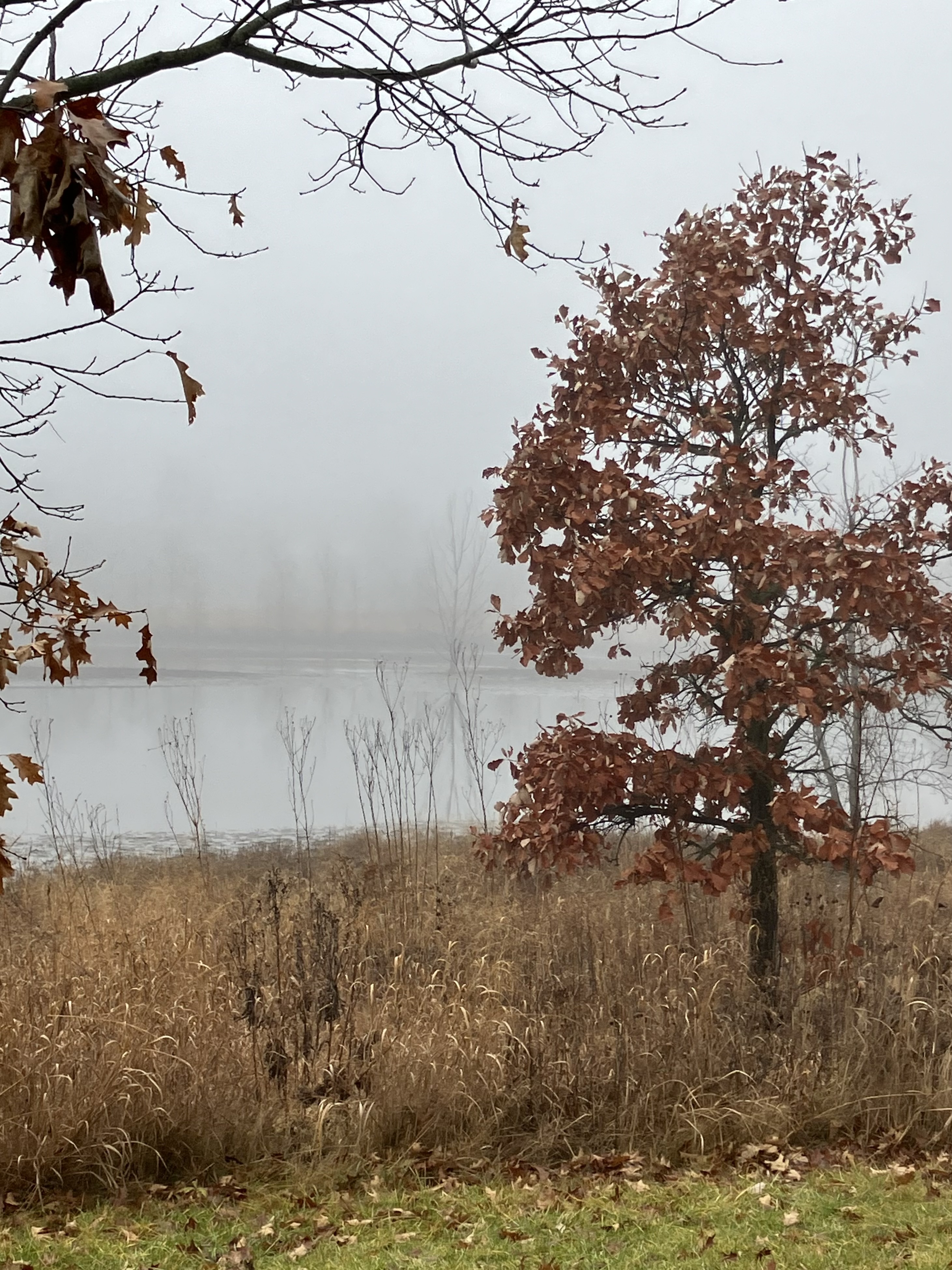
Happy New Year! I explored the concept of intuitive creativity throughout 2023, and I thought it would be helpful to share some of the insights I gained. First, intuitive creativity is just what it sounds like – using your intuition to approach the creative process. Intuition relies on right brained processes such as images, emotions, and recognizing patterns. I chose this image of the fog that I took on a recent walk, and I think it captures what this process feels like on the inside – foggy, yet beautiful when things finally start to come into focus. Second, this topic peaked my interest because traditional methods for approaching creativity were not working for me. Traditional approaches are not intuitive. They tend to be very logic based, and if your brain happens not to be wired that way, then they can prove challenging for you. These approaches call for creating everyday, tracking everything, planning things… you get the picture. And all creativity needs to end up in the place eventually if you ever hope to produce work that others can understand. However, for intuitive people, this traditional, logical approach often hinders their creative process if they try to institute it at the beginning of a project.

I ended up reading five books about focusing on intuition as a creative process, and here are some of the tips I picked up:

  • Receiving/Seeing – allowing space to receive insights that come from your brain and seeing where it takes you once you apply it to your creative project; basically, remaining open without shutting down what is coming to you
  • Feeling – focus on where the energy is; your body will tell you when you are really excited about something and when you feel nothing about something
  • Fragments – accept that information will come to you a little at a time, and that it will come out of order; just capture what is shared with you trusting that it will eventually make sense
  • Prompts – use prompts to keep exploring and playing
  • Let Go – let go instead of trying to force yourself to create; when you force yourself, you end up anxious, shutting down, or procrastinating

The next thing I explored is ways to get into this intuitive mode. The following list provides some activities which help with getting into this mindset:

  • Thinking – setting aside time to just think with no set ideas in mind
  • Bathing – keeping notepads close when taking showers and bathes because the best ideas usually come when you are relaxed
  • Walking – taking walks, preferably in nature, is always helpful for providing fresh air and imagery to spark ideas
  • Music – sitting still and listening to music helps to activate the creative part of your brain
  • Meditating – this practice opens up your mind (this is where most of my best ideas come from)
  • Journaling – freewriting in a journal often leads to many different avenues to explore
  • Seeking Inspiration – reading, watching movies/t.v., looking at art, etc.. and then taking the time to think about what you experienced

These are all great ways to activate your intuition. If you are anything like me, then you probably need to be reminded of this important part of your being in this tech-obsessed, logical world; I hope this post has inspired you to consider ways that you can tap into your intuition (especially as it relates to your creativity).
I No Longer Want To Be a Shadow Artist

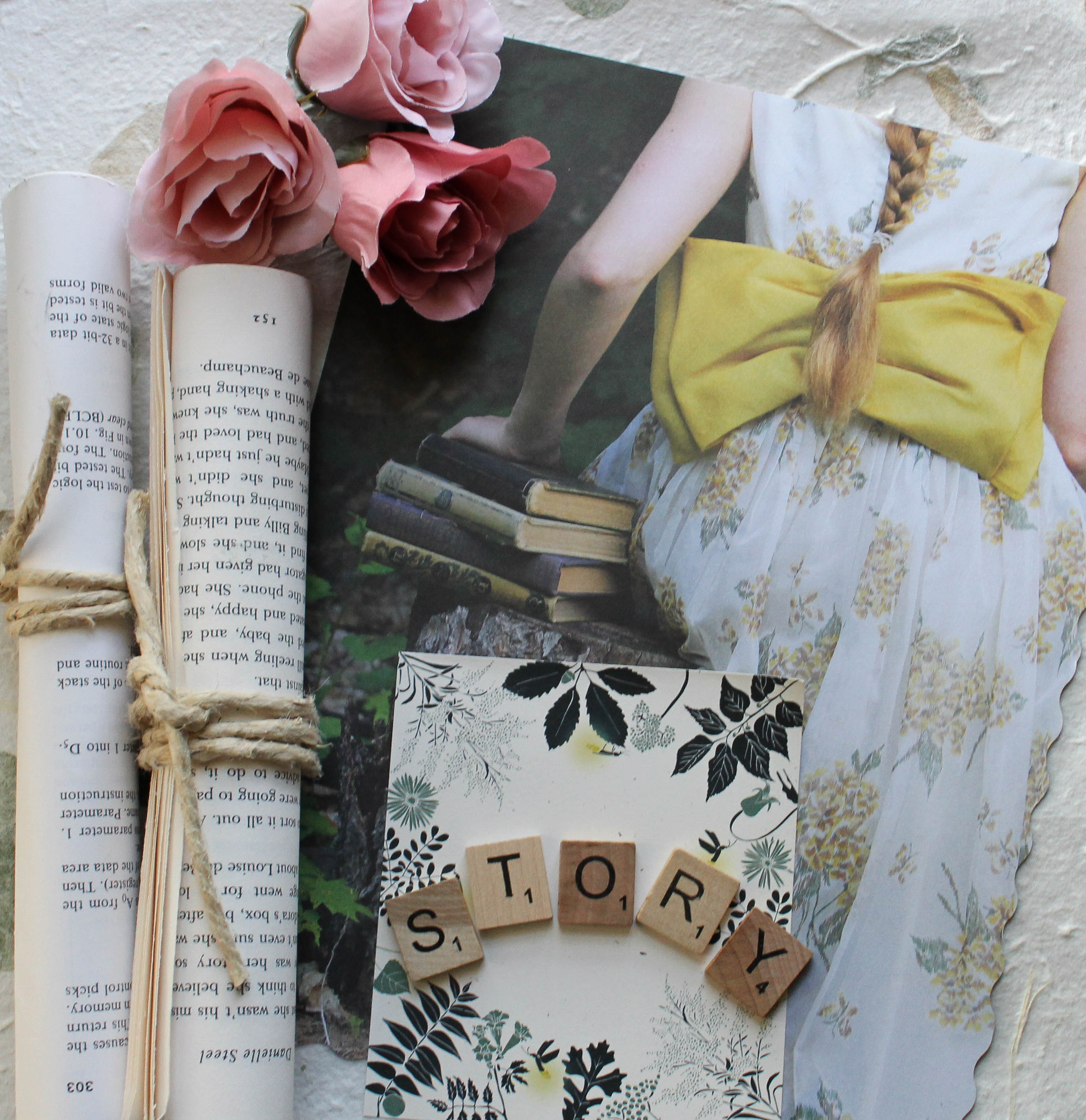
Image of Woman with Books Courtesy of: Alisha Firdland firdlandprints.com/Photo by: adellecirca1920

On one of my days off this week, I decided to visit a metaphysical store called Crazy Wisdom Bookstore in Ann Arbor. It is a wondrous place not only filled with books, but crystals, tarot decks, incense, journals, art, and gifts. I went there hoping to find books on art and spirituality, but I couldn’t find any. I decided to ask one of the lovely booksellers for assistance, and she looked up various keywords tied to art and spirituality and nothing was coming up. She was as surprised as I was they don’t have a section of the store devoted to this section. Then she said, “Wait, here’s one. “The Artist’s Way” by Julia Cameron.” I laughed and told her I already have that one. I thanked her and left the bookstore. As I was walking away, I started thinking, maybe that was a sign, a prompt, to return to the “The Artist’s Way.” The book is about creative recovery, and that is what I find myself in need of once again.

When I first delved into “The Artist’s Way” 13 years ago, I had no idea what I wanted or what to expect – all I knew was that I had this overwhelming urge to be creative. So, I dove into the book, reading sections and trying out exercises. I started keeping morning pages and going on scheduled artist’s dates as Julia advised more about morning pages and artist dates here. And eventually, I got back to my love of books and the stories they contain by virtue of participating in these activities. This then led to me:

  • reading more
  • learning to write
  • starting a blog
  • learning to draw
  • learning to paint
  • completing a 365 day art challenge
  • setting up art studios in my homes
  • starting an art business

All of these things came about because I embarked on this system of creative recovery, and stuck with it over the years. I realized that I have gotten away from it over the past year – I stopped writing daily morning pages, going on weekly artist’s dates, and creating on a regular basis.

I just read the first essay in “The Artist Way” where Julia Cameron talked about being a shadow artist, which is someone who admires the work of other artist without doing the work of being an artist themselves. This manifests as reading about others, going to museums and galleries, watching movies about artists, supporting the work of artists as agents or representatives, and so on; basically being in a field or pursuing hobbies closely related to the desired field. I’m sorry to admit that I’ve returned to being a shadow artist. I have been flipping through books and admiring the work of others, but I am no longer doing the work myself. There are reasons for this, of course (there always are); like I have a new job that is mentally exhausting and being totally overwhelmed by the scope of the creative project I am undertaking. I still dabble every now and then in my creative work – creating a piece of writing, creating a graphite sketch, working on a painting – but I miss the consistent routine of doing regular creative work. The work of being a true artist.

Now that I have returned to “The Artist’s Way”, I am getting back to basics – doing morning pages, scheduling weekly artist’s dates, and taking small steps on the mammoth story I want to tell (the story of two jazz age bibliophiles in France). I know that I am a Storyteller, but it is time to get back to the work of being a Storyteller. I plan to share my creative recovery, my journey as a Storyteller, on this blog going forward. I am hoping that the entries I share here will help someone else to recover their creativity as well; to stop being a shadow artist, and to start producing the art they long to make.

The Importance of Play

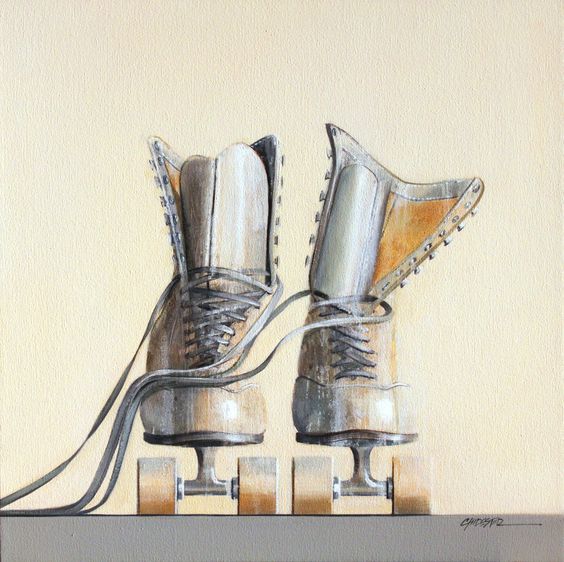
Painting by Wendy Chidester

As I have been struggling to stay productive over these last few months, I have also been contemplating what it means to incorporate play in my life in equal measure. Once we grow up, society basically tells us that play is no longer important for adults; but nothing could be further from the truth.

Play adds a sense of vitality to life – without it, life becomes dull, restrictive, and duty bound. Play helps you to feel more optimistic and creative because you tend to come up with innovative solutions to problems. It is also the foundation of most cultural aspects of our life such as art, games, books, sports, movies, and many more – basically the things we enjoy doing during our free time.

I referred back to the book “Play: How It Shapes the Brain, Opens the Imagination, and Invigorates the Soul” by Dr. Stuart Brown, and I wanted to share some of the insights from that book that stayed with me. One of the activities that Brown recommends is taking a look at your “play history” as both a child and adult to figure out what activities you most enjoy. Some of the questions he advised asking yourself include:

  • What did you enjoy doing as child? Why?
  • When have you felt free to do and be what you choose?
  • Is this part of your life now? If not, why not?
  • What do you feel stands in the way of your achieving some times of personal freedom?

When I completed my play history, I remembered that I spent a lot of time reading when I was young – my fondest memories involve libraries, book mobiles, and hours curled up in my cubby hole with a good book. Reading is one of the activities I consider to be my form of play now. But there was a period of time in my life where I was not reading on a regular basis, and my life was definitely not very enjoyable. I remember having thoughts like “Is this all there is?” (which is one of the questions that Brown mentions being a common question for people who are mainly just doing what is required in life without having much fun). Then, in 2007, I had a sort of epiphany, and started reading fiction again in earnest. Since I started reading again, my life has certainly changed for the better – I started to attend book related events, met new people that shared my interests, joined a writing center to learn more about the basics of writing, and of course, just started reading for pleasure in general. My other forms of play are also related to storytelling – writing and producing illustrations to accompany my writing.

One of the most compelling chapters in Dr. Brown’s book identifies eight basic play personalities that most people fall into (one is your dominant type) – here are general descriptions of the play personalities:

  1. The Joker – these people love nonsense, practical jokes, and telling jokes; they love to illicit laughter; examples include stand up comedians and class clowns
  2. The Kinesthete – these people love to move; they actually think better when they are moving – examples include athletes, dancers, yoga instructors
  3. The Explorer – these people love going new places, exploring new emotions, or delving deep into things at a mental level through research; examples include frequent travelers and scientists
  4. The Competitor – these people love competitive games and activities with specific rules; they play to win; examples include sports, gambling, sales
  5. The Director – these people enjoy planning and executing scenes and events; they like power, organizing, and throwing grand events; examples include event planners, film directors, entrepreneurs
  6. The Collector – these people enjoy having and holding the most, the best, the most interesting collection of objects or experiences; examples include hobby collectors, flea market lovers
  7. The Creator – these people find joy in making things or making something work; these include artists, crafters, designers
  8. The Storyteller – these people love using their imaginations; enjoy telling stories or reading/experiencing the stories created by others; examples include performers, writers, illustrators, cartoonists

As I mentioned earlier, I identify most with the Storyteller. Which one do you identify with the most? This may be the key to figuring out some activities and hobbies you might consider adding to your life to increase your sense of play.

In summary, we play to bring joy into our lives. And we can do this at any age. As one of my favorite Christmas songs says about the Christmas spirit being for “kids from 1 to 92” – I believe play is for all ages as well.

To learn more about Brown’s research on play, check out his book or visit his website at the National Institute for Play

2020 Life Updates

Photo courtesy of: vi.sualize.us (2)

We all know what kind of year 2020 has been, so I am not going to spend much time dwelling on it. I decided instead to share some of the good things that have happened in 2020 since my last post.

Move to Michigan – I moved to Michigan (from Massachusetts) at the end of August (this is the reason I have been so quiet on the blog; it takes a lot of time and energy to move). The idea had been brewing for awhile, and circumstances aligned to make it possible – so I made it happen. It was hard to leave behind my job and friends, but I am excited to be back near my family. I am also happy to be in a place with more diversity and a reasonable cost of living. Now, I am just anxious to find a job and a new place to live.

The Magic Feather – This time without a job has actually been great for my creativity. I started a story called “The Magic Feather” that will be told in the form of an illustrated journal by a young black woman in her early twenties. It will be set near France in the 1920s – some parts will take place in Paris but most parts will take place on a mysterious island called Peacock Mountain. The island is home to an art colony populated by exceptionally talented (and magical) artists, and my protagonist will be a newcomer tasked with chronicling/archiving what is going on. So far, I have written about 11,000 words and I am excited to keep going.

Mind Mapping – I have rediscovered the power of mind mapping for sorting out my thoughts. I have started using them for everything – planning my future, planning the scenes I am about to write, mapping the ideas I want to remember from the books I have read, and much more. I have started keeping them in the same hardbound books I use for journaling, and they are all in the same journal so I will know where to find them when I am ready to refer back to them.

Commonplace Book – I have also created a Commonplace Book to keep up with all of the bits and bobs from my writing projects. Commonplace Books used to be popular before the age of the internet- they basically are like written scrapbooks to keep up with content you want to remember such as quotes, poetry, recipes, lists, song lyrics, and the like. I have tweaked it a bit to also include imagery I find inspiring as well. It feels good to have a tangible book to flip through when I am seeking inspiration for my writing or illustrations.

Storytelling Focus – I have been thinking a lot lately about what the focus of this blog should be going forward. I have so many interests that it can be difficult to narrow things down. However, I think I have got it – I am planning to focus on celebrating the art of storytelling. My own stories and those of others plus story related content in general. I am still working out the particulars, but I feel good about this direction. Stories have always been my true passion, so it makes sense to put my focus on what I truly love. I am hoping to post more frequently too – I’ll start with once ever other week and see if I can work up to weekly posts. Baby steps!

Most Impactful Book – I have read a lot of books during this time of transition, but I decided to share the one that has been the most impactful during this time. The book is called “World Enough and Time” by Christian McEwan. I learned the following:

  1. Giving yourself time affluence = increased well-being. We tend to think about affluence in terms of money, but time is the new luxury.
  2. To engage in the art of reverie, which means slowing down, observing, sauntering, wandering, pausing, and digressing; basically the activities that our society deems a waste of time are actually essential
  3. The emotional parts of our brain take their own sweet time – empathy, imagination, love, fidelity, and ethics
  4. Instead of rushing from one new thing to the next, it is helpful to return to the same works to see what they reveal
  5. William Stafford advises having a symposium with the self early in the morning – he used to wake up at 5:00 a.m. and put his mind to work on whatever he found fascinating before everyone else in his household awoke for the day
  6. Unitask – multitasking leads to inefficiency and distraction

Most Inspirational Illustrator– I have been enjoying the work of the writer and illustrator Maira Kalman for some time now, but I had never really drilled down to learn how she thinks and works. I decided to change that by engaging in a deep study of her – examining her work, listening to various YouTube videos, and reading articles about her. These were my takeaways:

  1. She navigates the world with a sense of humor and irreverence. She learned both from her mother – a woman who left her husband in Tel Aviv to move to America, wore only white, and did exactly what she wanted each day of her life.
  2. She says her creative process is to walk around daydreaming all day and sharing her personal views via illustrations and writing. She takes long walks everyday and documents what happens.
  3. Her philosophy is that there are only two vital things in life: Work and Love. If you put work into these two, you have a shot at happiness.
  4. She starts each day by reading the obituaries. She finds it extraordinary to read about the totality of peoples’ lives, and it motivates her to go forward with her day and make the most of it.
  5. Her favorite quote is: Not everything will be okay, but some things will.

I know I covered a lot in this post, but I had a lot to share after being away so long. I hope that you had some positive things happen in 2020 that you will be able to carry forward into 2021 and beyond.